
Tips Python

by DCSoftTech Editorial Team November 10, 2026
Python is celebrated for its readability and clean syntax. However, even experienced developers sometimes overlook built-in features and idioms that can make code significantly more Pythonic, efficient, and concise. Whether you are building a full-stack application or writing data scripts, here are some fundamental yet incredibly useful Python tips that will level up your coding […]

by DCSoftTech Editorial Team October 30, 2026
When working with Python, dictionaries (dict) are one of the most frequently used data types. However, anyone who works with standard dictionaries has likely run into a familiar error: the KeyError. To avoid this, we often have to use the .get() or .setdefault() methods, or manually check if key in dict. This can make the […]
by DCSoftTech Editorial Team October 27, 2026
During web application development, system data processing, or data analysis, sorting is a continuous operation. Python provides an extremely powerful built-in sorted() function, but its true power is only unlocked when you master the key parameter. This article from DCSoftTech will provide a detailed guide to the syntax, underlying principles, and the 5 most common […]
by DCSoftTech Editorial Team October 21, 2026
When working with Dictionaries in Python, checking whether a Key already exists before assigning a value is a very common operation. However, traditional if-else statements often make the source code verbose. The setdefault() method is an effective solution that allows you to initialize and update a Dictionary in just a single line of code. In […]
by DCSoftTech Editorial Team October 16, 2026
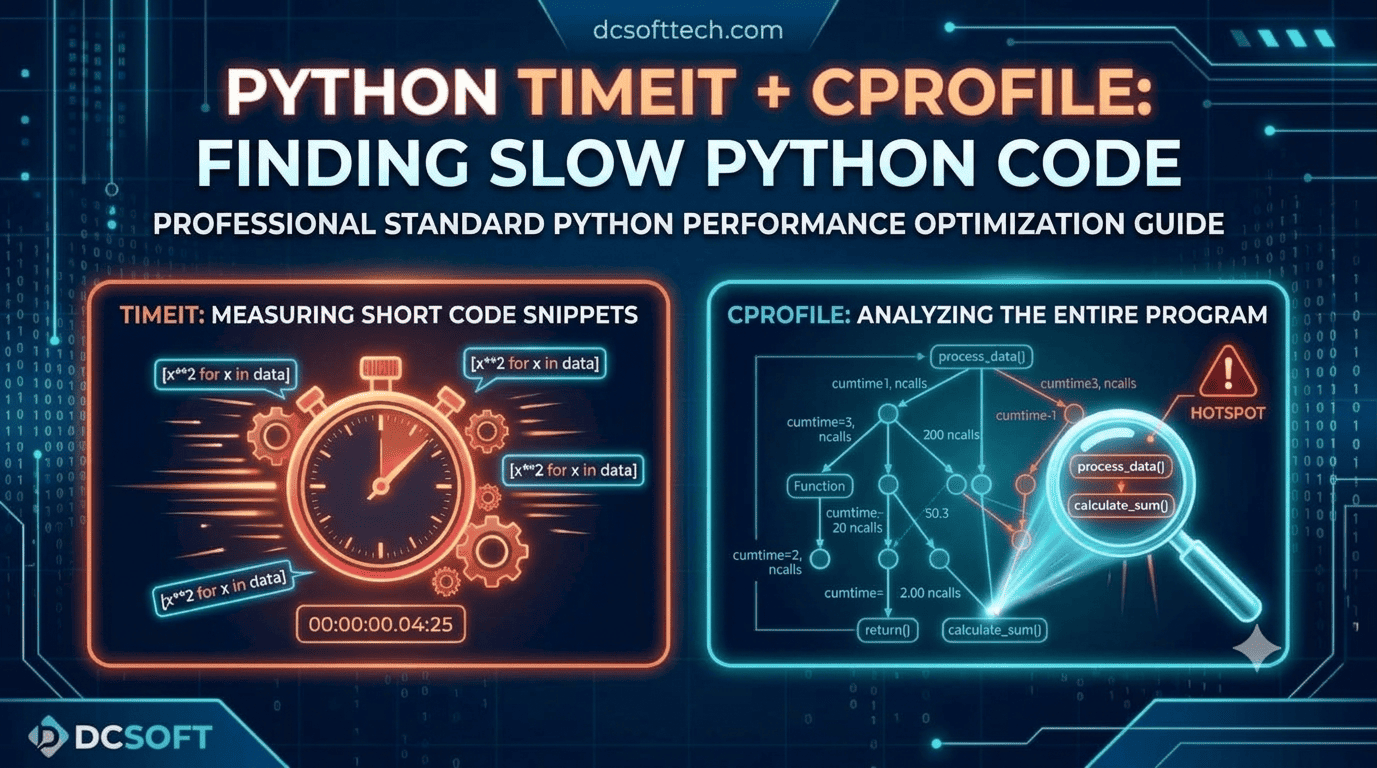
When developing software in Python, writing code that functions correctly is only the first step. As your system scales or handles larger volumes of data, performance becomes a decisive factor. However, never guess your program’s bottlenecks! Precise measurement using dedicated tools like timeit and cProfile is the only way to know exactly which piece of […]
by DCSoftTech Editorial Team October 15, 2026
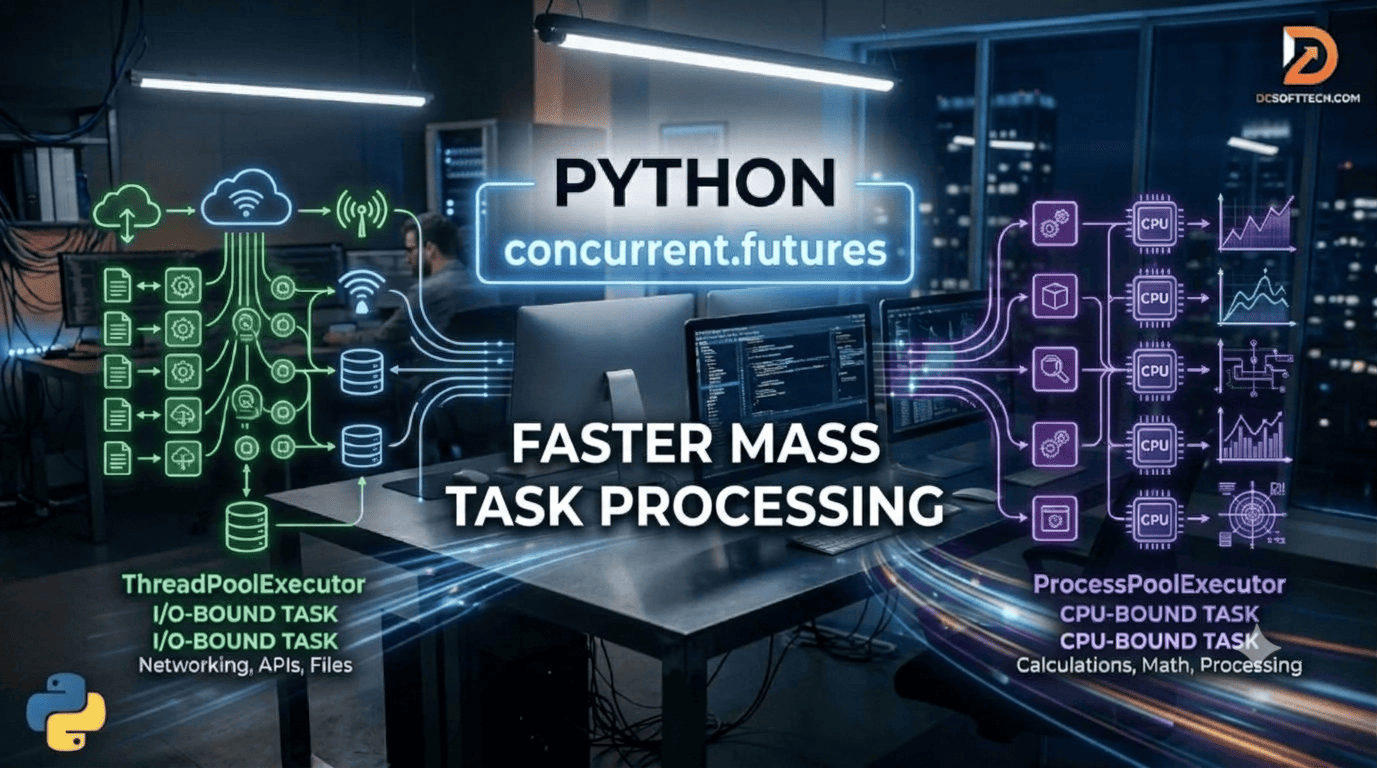
When your Python program has to handle hundreds of API requests, read and write thousands of files, or perform heavy mathematical computations, running them sequentially creates a massive bottleneck. Introduced in Python 3.2, the concurrent.futures module provides a high-level interface to optimize and streamline parallel and asynchronous processing. In this article, DCSOFT will guide you […]
by DCSoftTech Editorial Team October 12, 2026
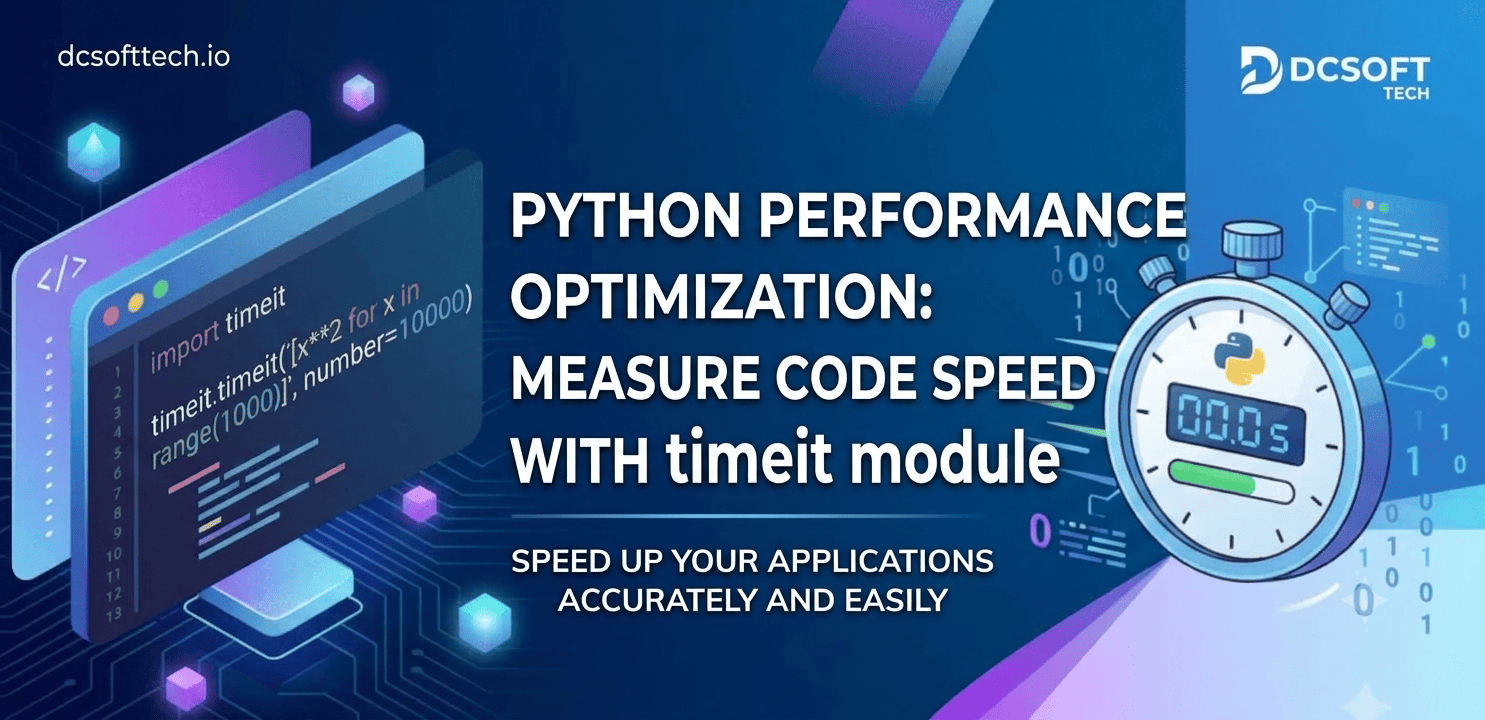
When developing Python applications, performance tuning is an indispensable step. However, if you measure code execution time using manual methods like time.time() or time.perf_counter(), the results are often noisy due to interference from system background tasks, the Garbage Collection (GC) mechanism, or system clock resolution. To thoroughly solve this problem, Python provides the built-in timeit […]
by DCSoftTech Editorial Team October 11, 2026
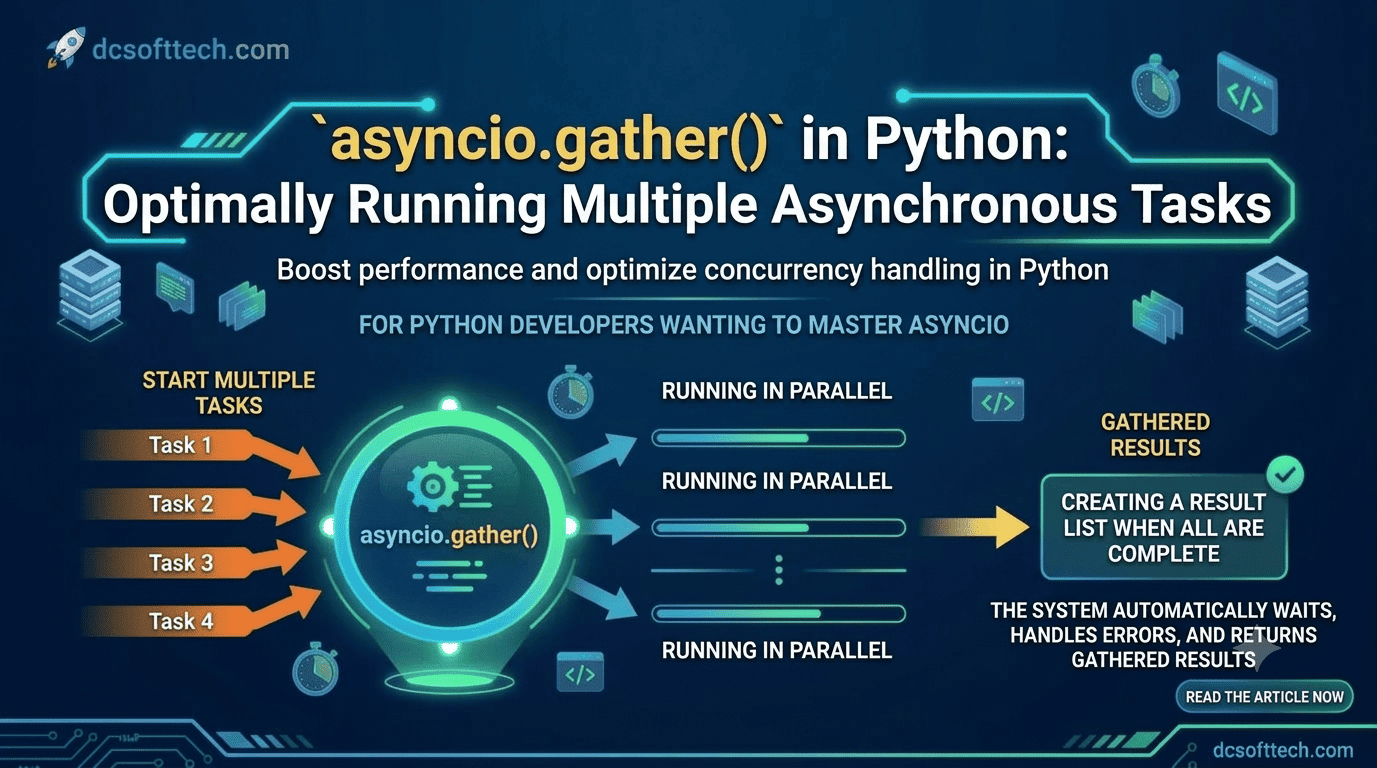
In modern Python programming, asyncio has become the core library for handling asynchronous programming. When you need to execute multiple I/O-bound tasks concurrently (such as calling APIs, querying databases, reading/writing files, or web scraping), the asyncio.gather() function is a powerful tool to save waiting time and optimize performance to the maximum. This article from DCSOFT […]
by DCSoftTech Editorial Team October 10, 2026
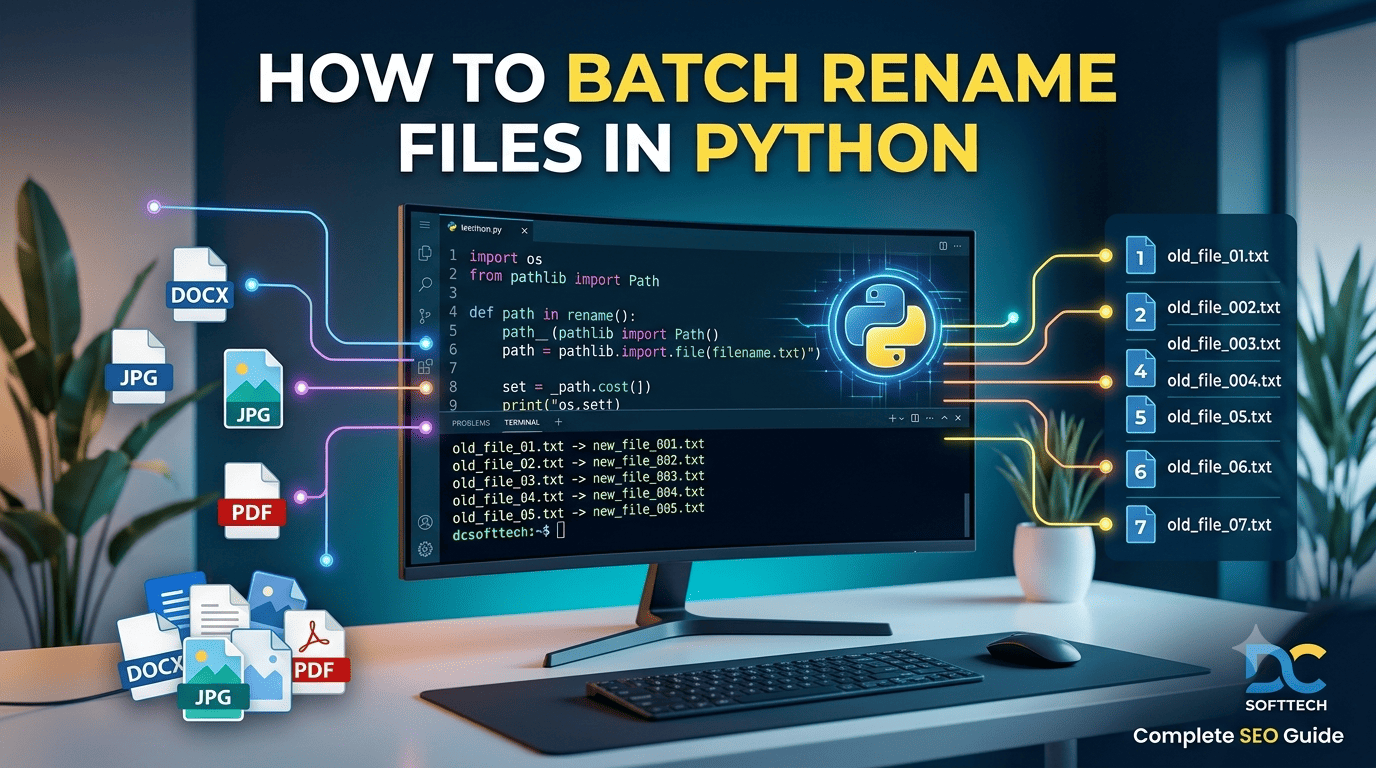
In data processing, document management, or daily system operations, manually renaming tens or hundreds of files is not only time-consuming but also prone to human error. With Python, you can automate this repetitive task accurately and flexibly in just a few lines of clean code. In this guide, DC SoftTech will show you how to […]